
Back to Overview

Introduction to the Principle of Lost Foam Equipment—Bookmark Now!

What is the principle behind lost foam casting equipment? Let's explore it together below.

What is the principle behind lost foam casting equipment? Let's explore it together below.

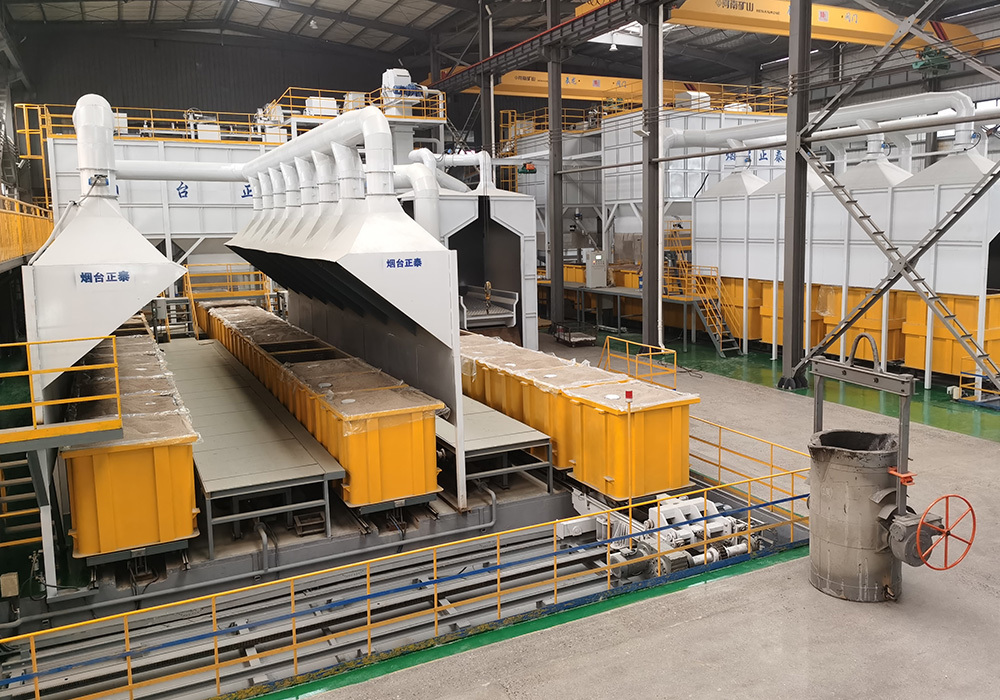
Lost foam casting equipment (also known as solid pattern casting) involves creating a solid pattern mold from foam plastic (EPS, STMMA, or EPMMA polymer materials) that perfectly replicates the structure and dimensions of the intended casting part. After coating the mold with refractory paint (for reinforcement, surface finish, and venting) and drying it, the mold is buried in dry quartz sand. Through three-dimensional vibration molding, The molten metal is then poured into the vibrated sand mold under negative pressure. The heat causes the polymer model to vaporize and be extracted, allowing the liquid metal to replace it. After cooling and solidification, a new casting is formed. This innovative casting method produces castings through a single-step process.

Lost foam equipment offers the following advantages:
1. High casting quality at low cost;
2. Applicable to all materials and sizes;
3. High precision, smooth surfaces, reduced cleaning, and machining savings; 4. Significantly reduced internal defects and dense casting structure; 5. Enables large-scale, high-volume production; 6. Suitable for mass production of identical castings; 7. Compatible with both manual operation and automated production line control; 8. Production line operations meet environmental protection technical parameters; 9. Greatly improves working environment and production conditions on casting lines, reduces labor intensity, and lowers energy consumption.

What is the process overview of lost foam equipment?

I. Selection of Foam Beads: EPC foam beads come in three types.

1. Expandable polystyrene resin beads (abbreviated as EPS);

2. Expandable styrene-methacrylate copolymer resin beads (abbreviated as STMMA);

3. Expandable polymethyl methacrylate resin beads (EPMMA).

Model production involves two scenarios:
1. Fabrication from expanded beads: Pre-expansion → Curing → Expansion → Cooling and removal from mold.

1. Pre-expansion: EPS beads undergo pre-expansion in the mold to achieve a specific size. This process determines the model's density, dimensional stability, and precision, making it a critical step in Huawell's lost foam equipment. Three methods are used for EPS bead pre-expansion: hot water pre-expansion, steam pre-expansion, and vacuum pre-expansion. Vacuum pre-expansion achieves high bead expansion rates and dry beads, making it the most widely adopted method in lost foam equipment.

2. Curing: Pre-expanded EPS beads are stored in a dry, ventilated silo for a specified period. This balances internal and external pressure within the foam cells, imparting elasticity and re-expansion capability while removing surface moisture. Curing duration ranges from 8 to 48 hours.

Foam molding involves filling the cavity of a metal mold with pre-expanded and cured EPS beads. Heating causes the beads to re-expand, filling interstitial voids and fusing together to form a smooth surface—the mold.

II. Fabrication from Foam Boards: Foam board → Resistance wire cutting → Bonding → Mold.

For simple analytical models, use an electric wire cutting device to cut foam boards into the desired shape. For complex models, first divide the model into several key sections using the electric wire cutting device, then bond them together to form a complete analytical model.
 

Embrace customers from all over the world !

If you have any questions, you can leave us a message !
