
Professional manufacturer of foundry production lines
What are the characteristics of lost foam equipment? How are negative pressure and temperature determined during the casting process? How should lost foam equipment be maintained?
The primary characteristics of lost foam equipment are as follows:
First, it employs multiple water and gas supply lines, primarily consisting of high-pressure water pump supply and high-pressure blower gas supply.
Second, it employs specialized sand-cooled fluidized bed gas nozzles, preventing sand blockage that could hinder airflow. Gas nozzles are evenly distributed across the fluidized bed surface, ensuring optimal gas distribution.
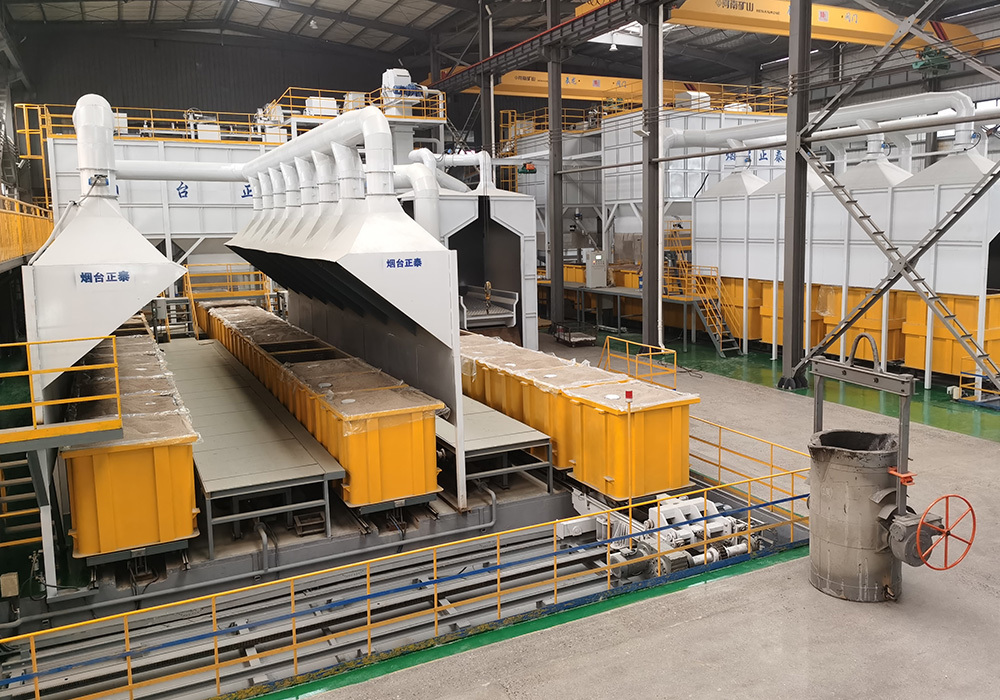
Third, the combination of a vertical cold storage tank and a horizontal fluidized sand cooling bed utilizes specialized suction, blowing, and cooling water systems, delivering excellent cooling performance without causing blockages.
Third, the dust outlet connects to a dust collection system, promptly removing dust separated during heat exchange to purify the sand.
Fourth, observation windows are installed on the cooling bed box, allowing real-time monitoring of medium sand operation within the bed.
Lost foam equipment requires meeting numerous conditions during casting, with negative pressure and temperature values needing prior determination. Let's examine how these are established.
I. Determining Negative Pressure:
During pouring, negative pressure primarily compacts the lost foam casting equipment, preventing sand displacement, mold box movement, and pattern wall shifting. It also accelerates the expulsion of pattern vaporization byproducts, enhancing the molten metal's flushing capability.
Surface defects in the mold casting equipment may occur. Excessively high pouring temperatures generate instantaneous gas volumes, requiring higher negative pressure to increase the expulsion rate of vaporization byproducts. However, excessively high negative pressure increases the molten steel's penetration energy.
After comprehensive consideration of sand adhesion and sintering, the negative pressure is set at 0.06-0.075 MPa.
II. Temperature Determination:
Pattern vaporization consumes heat from the molten steel, necessitating a higher pouring temperature. Simultaneously, elevated temperatures facilitate the smooth expulsion of thermal decomposition products from the pattern, reducing carbon enrichment in the lost foam casting equipment.
After comprehensive evaluation, the pouring temperature is controlled at 1560-1570°C.
While temperature and vacuum pressure are critical for ensuring proper mold formation in lost foam casting equipment, these parameters must be adjusted based on specific conditions and cannot be applied universally.
Below we outline maintenance procedures for lost foam equipment:
1. Authorized personnel must operate with identification tags. Unauthorized individuals are prohibited from using the computer or pressing buttons to prevent machine damage, program malfunction, or data loss.
2. When moving equipment, ensure hooks remain engaged and prevent forward surges. Avoid impacting any machine components, including guide rails.
3. After operation, return equipment to a secure position and close air valves. Purge residual gas from pipelines and shut off power.
4. Equipment malfunctions must be addressed promptly by maintenance personnel. For severe faults, report to the Equipment Department to coordinate a repair plan with relevant personnel. Unauthorized disassembly for inspection is strictly prohibited.
For further information regarding lost foam equipment, please contact us.
NEXT:
Contact Us
E-mail:
Phone:
86-15910026727
Add:
No.19, Chuangye Rd, High-tech Zone, Yantai, China
Related Posts
